
Seeking a LOT of Feedback
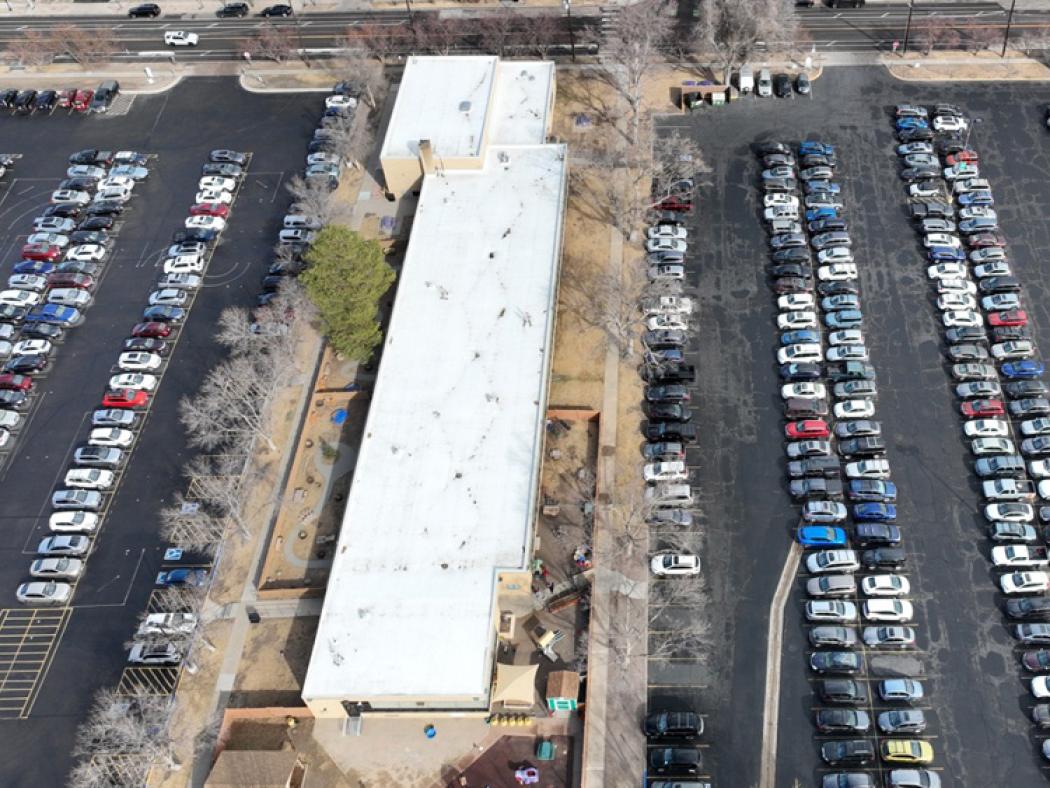
Arapahoe Community College (ACC) Microeconomics students are seeking feedback about the status of parking at, and around, the ACC Littleton Campus. Data will be compiled to gain a better understanding of how supply & demand impact parking on campus and within the surrounding community.
We connected with ACC Economics Program Lead / Finance Faculty Tami Bertelsen to talk about the scope of the project, the opportunity for Microeconomics students to gain valuable experiential learning, and the community-driven collaboration for this project.
Tell us what this project is about?
This survey is part of a 3-semester Course-based Undergraduate Research (CUREs) project focusing on the supply and demand for parking at ACC in 3 of our Microeconomics sections. This allows over 200 economics students to participate in this project with support from our Law Enforcement Academy for drone footage and Statistics students for mathematical analysis. This has become a true collaborative process at ACC with various areas of the college supporting this work and encourage students in their endeavors including marketing, business students and faculty, Campus Police, Student Life, the library, and many more. The Littleton community is also invited to support our students. To pull all of this together, I am working with additional economics faculty, Christopher Fortney and Emilia Pearson, and five amazing honors undergraduate researchers to centralize communication, consolidate information, create templates, analyze feedback and data from various sources, and prepare presentations for ACC and the undergraduate research symposiums.
Why are the Microeconomics students studying parking at ACC and within nearby communities?
Parking is a great way to get a hands-on perspective of supply and demand. Parking lots occupy a significant portion of land on many college campuses, including ACC. While parking is necessary for students, faculty, staff, and visitors, land devoted to surface parking may also represent an opportunity cost, especially in areas experiencing population growth, rising land values, transportation changes, and increasing interest in sustainable campus planning.
This CUREs project will evaluate the “highest and best use” of parking lots at ACC from an economic perspective. The study will examine current parking utilization, transportation patterns, opportunity costs, student and employee needs, and potential alternative uses. Possible alternatives may include continued parking, mixed-use development, student housing, solar canopies, or community partnerships.
The central issue this study addresses whether surface parking lots at ACC represent the most economically efficient and socially valuable use of campus land.
Although parking is important for campus operations, the actual demand for parking may vary by time of day, day of week, academic term, modality of instruction, and user group. If some parking areas are underutilized, ACC may have opportunities to repurpose land in ways that produce greater economic, environmental, educational, or community value.
Using tools from microeconomics, students will assess whether existing parking lots are being used efficiently and equitably. The students will produce a research report and presentation offering evidence-based options for campus leaders and community stakeholders.
When does the survey open, and when does it close?
October 15 through November 1. We will have a follow-up survey next semester for those who wish to dig deeper into parking lot ideas at and around the ACC Littleton campus. This survey will be developed by students in our courses in the Spring 2027 semester. At the end of this initial survey, participants will have the opportunity to provide their email for the Spring 2027 survey.
What a great opportunity for ACC students to gain experience working with the City of Littleton and the Littleton Downtown Development Authority. How will this broaden their horizons as they prepare to go out into the world to Move Mountains?
This project provides a way for students to get real-world connections and an understanding of how economic research is conducted. There are many steps to this project. The Spring 2026 students laid the ground for this project and learned how to develop and launch a pilot survey, conduct a literature review, work collaboratively, and lay out the next steps for the Fall 2026 students. Fall 2026 students are learning how to develop and revise surveys, network and communicate with those in and out of our class, conduct a survey, analyze data, tell an economic story, and lay out the next steps for the Spring 2027 students. The final group of students will follow a similar process with the final in-depth survey for those who provide their information in the initial survey. These students will complete the research project.
In addition to these important skills, students are developing real-world presentation skills. In September, honors undergraduate researchers presented to The Littleton Downtown Development Authority and the students in my Microeconomics course presented to ACCs Shared Governance Leadership Council. They felt overwhelming support for their work and were inspired to consider how deeply parking impacts our college and community.
How can ACC better serve its students and community members through this project?
Economics is the study of how people make choices using scientific methodology. The research goal of this project is to determine the highest and best use of the Littleton campus parking lots. This is a typical goal for appraisers and economic developers. Students go through many steps to conduct this study. They start by learning how to develop surveys through Pew Research, conducting a comprehensive literature review (you may be surprised how much economic research exists on parking), observing pictures and videos of the parking lots over time, developing and revising surveys, piloting a survey, launching the survey to the broader community, analyzing data, and sharing the story of the supply and demand for parking. With this data, we will be able to prepare presentations that include parking lot options for ACC and the Littleton Downtown District Authority to consider with a cost/benefit analysis of the various options.
Where will survey participants be able to access survey results?
Students in selected statistics courses will complete the initial analysis, and students in three of our Microeconomics sections – along with the honors undergraduate researchers – will analyze the data and results. This semester, economics students will tell the story of the data and come up with parking options based on the survey.
We will share our results and initial analysis with the Littleton Downtown Development Authority at their board meeting on December 16. This meeting is open to the public and we will be happy to share our presentation after that date.
The Spring 2027 Microeconomics students will continue this work with a follow up survey and analysis. This information will be used to create a final presentation that will be available in May 2027. We hope to share this presentation broadly with ACC and the Littleton community.
ACC drives new and creative approaches to education, with a focus on building forward-thinking pathways to social and economic mobility. ACC’s innovative, workforce-aligned programs deepen community collaboration, ensuring students and employers are equipped with skills and opportunities to thrive.